
Last updated September 25, 2026
How to Hire a ADU Contractor in Pasadena: A Step-by-Step Guide
A Pasadena homeowner can hire a licensed, well-reviewed general contractor and still end up with an ADU that fails final inspection. The contractor built exactly what the underdeveloped permit drawings said. The architect who drew them is no longer on contract. This happens more often than you’d expect, and it’s why the standard advice - get three bids, check the license, read reviews - is necessary but not sufficient for an ADU project. In this guide, we’ll show you how to close the liability gap between your permit set and your finished building before you sign anything, and you can explore our more guides & resources for additional homeowner support.
Quick Answer
To hire an ADU contractor in Pasadena, verify CSLB license B-General Building plus electrical and plumbing classifications, demand a design-build contract that holds one firm accountable for both drawings and construction, and insist on line-item pricing with a written fixed price before work starts. The contractor should provide plan check correction letters from recent Pasadena submissions and guarantee certificate of occupancy in writing.
Table of Contents
- Why Design-Bid-Build Fails for Pasadena ADUs
- How to Verify CSLB Licenses in 90 Seconds
- The Five Contract Clauses That Separate ADU Specialists from Remodelers
- Interview Questions That Reveal Real ADU Permit Experience
- Red Flags in ADU Bids Specific to the Pasadena Market
- Understanding Pasadena’s ADU Permit Process
- What Pasadena ADUs Actually Cost: Realistic Ranges
- Common Mistakes to Avoid
- When to Call a Professional
- Frequently Asked Questions
Why Design-Bid-Build Fails for Pasadena ADUs
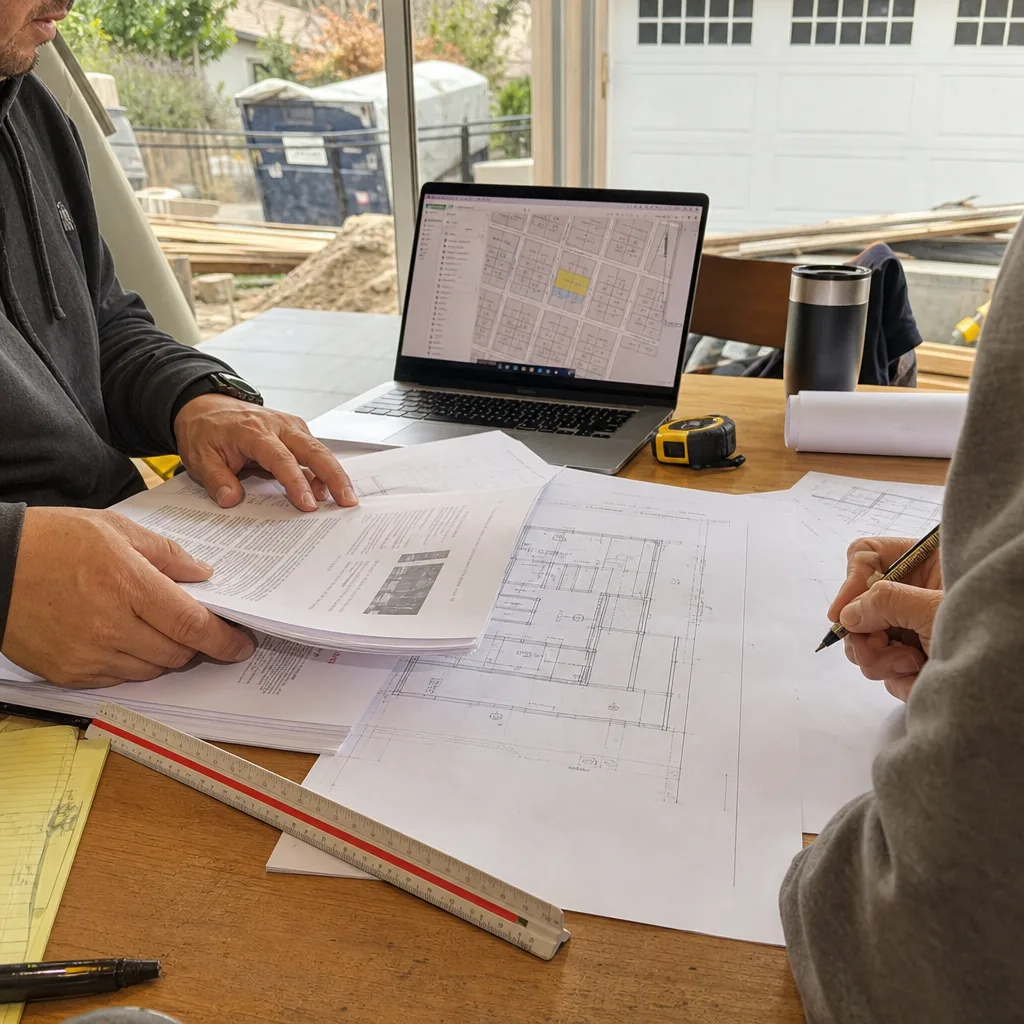
Most homeowners approach an ADU the way they’d approach a kitchen remodel. They hire an architect or designer, pay for drawings, then shop those drawings to contractors for bids. This is called design-bid-build, and it’s the standard method for commercial construction. For ADUs in Pasadena, it’s a structural mistake.
Here’s the gap. The architect’s contract ends when the permit set is approved. The contractor’s contract begins with construction. Between those two contracts sits a zone of ambiguity: what happens when the city inspector flags a discrepancy between the approved drawings and field conditions? Who pays to redesign? Who pays for the delay? In design-bid-build, the answer is usually you.
We’ve seen this in Pasadena’s Bungalow Heaven neighborhood, where narrow lots and 1920s foundations create field conditions no as-built survey fully captures. A garage conversion ADU there might reveal a 3-inch slab instead of the 4-inch minimum assumed in the drawings, a scenario covered in our Seasonal ADU Care for Pasadena: Year-Round Homeowner’s Guide. The contractor stops work. The architect is off contract. The homeowner pays for a change order that should have been caught in a single-contract design-build process.
A design-build studio eliminates this gap by holding one entity responsible for both the permit set and the finished structure. The same team that specifies your foundation depth in the drawings manages the crew that pours it. If there’s a conflict, it’s resolved internally, not billed to you as a change order. This is why we structure every Ellery ADU Studio Pasadena project as a single contract at a single written price.
The liability gap is particularly acute in Pasadena because of the city’s active plan check process. Pasadena Building & Safety reviews ADU submissions against state law and local ordinances, including the city’s specific setback and height restrictions. Corrections are common, which is why an ADU Design & Permitting Maintenance Checklist for Pasadena Homeowners helps anticipate issues. In a design-bid-build arrangement, those corrections can trigger cascading costs that the contractor didn’t price because they weren’t responsible for the original drawings.
How to Verify CSLB Licenses in 90 Seconds
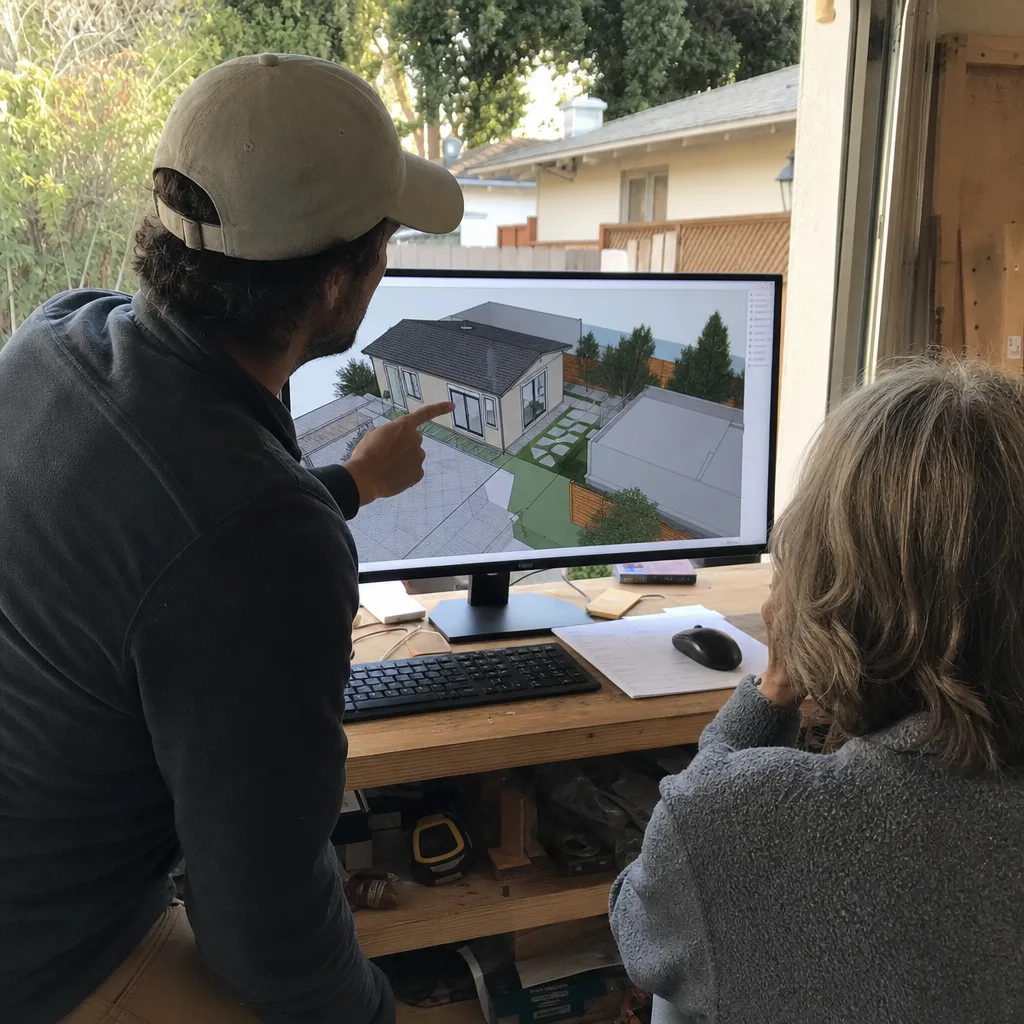
California requires specific license classifications for ADU construction, and “licensed contractor” is not specific enough. Here’s what to check and where to check it.
- Go to cslb.ca.gov and click “Check a License.”
- Enter the contractor’s license number. Do not accept “pending” or “applied for.”
- Verify the primary classification is B-General Building. This is required for any structure that involves two or more unrelated trades.
- Confirm active C-10 Electrical and C-36 Plumbing classifications, either held by the primary contractor or covered by named subcontractors with verified licenses.
- Check that the license status is “Active,” the bond is current, and workers’ compensation insurance is on file if the contractor has employees.
- Review the disciplinary history. Even one recent citation for permit-related work is a flag for ADU projects.
Pasadena adds a local layer. Contractors working in the city must also register with Pasadena Building & Safety and carry a current business license from the city. Ask for the Pasadena business license number and verify it through the city’s online portal. A contractor with a valid CSLB license but no Pasadena registration cannot pull permits in the city.
The B-General Building classification matters because ADUs trigger multiple trades: framing, electrical, plumbing, HVAC, and often foundation or seismic work. A contractor holding only a specialty classification, like C-39 Roofing, cannot legally serve as the prime contractor for a full ADU. We’ve encountered homeowners who discovered this mid-project, when the city rejected the permit application. The fix was a complete restart with a properly licensed contractor.
The Five Contract Clauses That Separate ADU Specialists from Remodelers
General contractors who occasionally build ADUs often use standard residential remodeling contracts. These contracts lack the specific protections ADU projects require. Here are the five clauses that distinguish a serious ADU firm.
1. Fixed-Price Language with No Open-End Provisions
The contract must state a total project price, not an estimate or a range. Under Haven Standard Clause 1, every Ellery ADU Studio Pasadena project is quoted with a written price before any work begins. The words “call for a quote” do not appear in our process because they indicate a pricing model that shifts risk to the homeowner. Your contract should specify that the price is fixed except for change orders you initiate in writing, with a defined threshold (typically $500) below which no change order is processed without your signature.
2. Permit Ownership and Plan Check Responsibility
The contract must specify who owns the permit set and who is responsible for plan check corrections. In a design-build arrangement, this is the same entity. The clause should state that all corrections required by Pasadena Building & Safety are included in the fixed price, with no additional design fees. We’ve seen contracts where the architect retained permit ownership, meaning the homeowner had to coordinate between designer and builder for every correction. That coordination is not your job.
3. Change-Order Thresholds with Written Authorization
Any cost increase above a defined dollar amount requires your written signature before work proceeds. The threshold should be low enough to matter - $250 or $500, not $5,000. The contract should also define what constitutes a change order versus included scope. In Pasadena, unexpected soil conditions or buried utility lines are common on older properties. The contract should specify who bears the risk of these conditions and how they’re documented.
4. Inspection Attendance and Documentation
The contract should require the contractor or project manager to attend every inspection, with a documented photo record of findings. At Ellery ADU Studio Pasadena, we provide a documented photo record on every visit - clients receive evidence of what was found and what was done, not a summary of how it felt. The contract should also specify the timeline for addressing failed inspections and who pays for re-inspection fees.
5. Certificate of Occupancy Guarantee
The contract must guarantee final certificate of occupancy, with defined consequences if it’s not achieved. This is the difference between a contractor who builds structures and a contractor who delivers legal, rentable ADUs. The guarantee should be backed in writing, not verbal. Our 365-Day Done Right Promise applies here: if the finished ADU is not built to the permitted drawings, we make it right.
Interview Questions That Reveal Real ADU Permit Experience
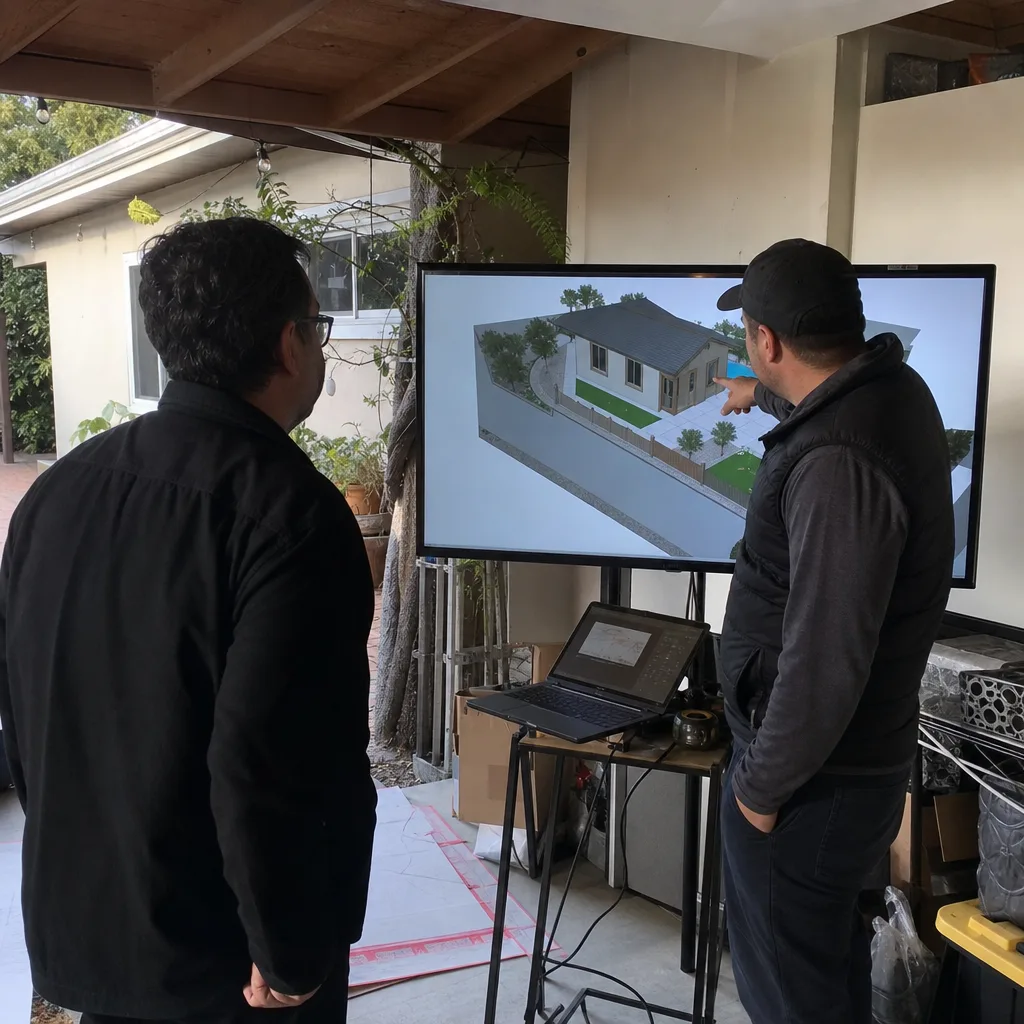
Any contractor can claim ADU experience. These questions separate those who’ve navigated Pasadena’s permit process from those who are learning on your project.
“Can I see the plan check correction letters from your last three Pasadena ADU submissions?”
A contractor with genuine Pasadena ADU experience will have these. Plan check corrections are standard, and the letters show how the contractor responds to city feedback. If they hesitate or offer to “get back to you,” they may not have three Pasadena ADUs in their recent history. The letters should show the project address, the correction items, and the resolution.
“Walk me through your last garage conversion ADU in Pasadena. What did the existing slab test show, and how did you handle the foundation line item?”
Garage conversions are the most common ADU type in Pasadena, and the existing slab is where projects derail. A knowledgeable contractor will describe the slump test or core sample, the reinforcement findings, and whether the slab required replacement, overlay, or was accepted as-is. Vague answers about “checking it during construction” indicate no systematic process.
“How do you handle Pasadena’s side-yard setback requirements when the available width is under ten feet?”
Pasadena requires specific setbacks that can eliminate ADU feasibility on narrow lots. An experienced contractor will know the state law allowing reduced setbacks for ADUs, the local exceptions, and when a variance is required. They should reference specific projects in neighborhoods like Garfield Heights or Madison Heights where they’ve solved this.
“What prefab or modular systems have you specified for Pasadena ADU sites, and how do you coordinate utility connections?”
Pasadena’s utility infrastructure varies significantly by neighborhood. A contractor fluent in prefab systems - whether Abodu, Cover, or Tuff Shed - will describe the specific coordination required with Pasadena Water and Power for electrical service upgrades, or with the city’s sewer lateral program. They’ll know that James Hardie siding, while common in custom builds, requires different detailing when applied to panelized systems.
“What does your permit set include beyond the minimum for Pasadena plan check?”
Minimum permit sets pass plan check. Comprehensive permit sets prevent construction conflicts. Look for mention of structural calculations, MEP coordination drawings, and interior elevations. At Ellery ADU Studio Pasadena, we treat the permit set as the core product because it’s the document that governs every trade on site.
Red Flags in ADU Bids Specific to the Pasadena Market
These warning signs are particularly common in Pasadena’s competitive ADU market, where demand has attracted contractors from outside the city with limited local experience.
- Lump-sum pricing with no line-item detail. You cannot compare bids or verify scope without line items. A single number for “ADU construction” conceals assumptions about foundation, utilities, and finishes that will surface as change orders.
- Verbal timeline promises not in writing. Pasadena’s plan check timeline varies by project complexity and current volume. Any timeline not tied to specific milestones with contingency days is not a plan.
- Proposals submitted before a site survey. An accurate ADU bid requires verification of existing conditions: slab thickness, utility locations, sewer lateral condition, and access constraints. A proposal based on satellite imagery or homeowner description is not a fixed price.
- No mention of Pasadena’s specific ADU ordinance. The city has local requirements beyond state law, including design review in certain historic districts and specific parking replacement rules. A bid that doesn’t reference these hasn’t been prepared for Pasadena.
- Subcontractor names not listed or verified. The electrical and plumbing trades must be performed by CSLB-licensed subcontractors, not day laborers. The bid should name them and their license numbers.
- Permit fees listed as “TBD” or “homeowner responsibility.” Permit fees are calculable from Pasadena’s published fee schedule. Shifting them to you without a maximum cap is a pricing dodge.
Understanding Pasadena’s ADU Permit Process
Pasadena processes ADU permits through Building & Safety, with additional review by Planning for certain zoning and historic district properties. Understanding this process helps you evaluate whether a contractor has actually done it before.
Step one is a preliminary review, sometimes called a pre-application meeting. This is optional but recommended for complex sites. The homeowner or their representative presents a site plan and basic concept; city staff flags obvious conflicts before design investment. Contractors who skip this step to “save time” often spend more in later corrections.
Step two is plan check submission. Pasadena requires a complete permit set: architectural plans, structural calculations, electrical and plumbing plans, and energy compliance documentation (Title 24). The city has 60 days to respond under state law, but incomplete submissions restart the clock. Experienced contractors know the common correction items: fire separation details between ADU and primary residence, egress window specifications, and energy compliance forms.
Step three is the correction cycle. Most Pasadena ADUs require at least one round of corrections. The contractor or designer responds to each item in writing, resubmits revised plans, and awaits approval. This is where design-bid-build arrangements fracture. If the designer is off contract, the homeowner becomes the project manager for corrections.
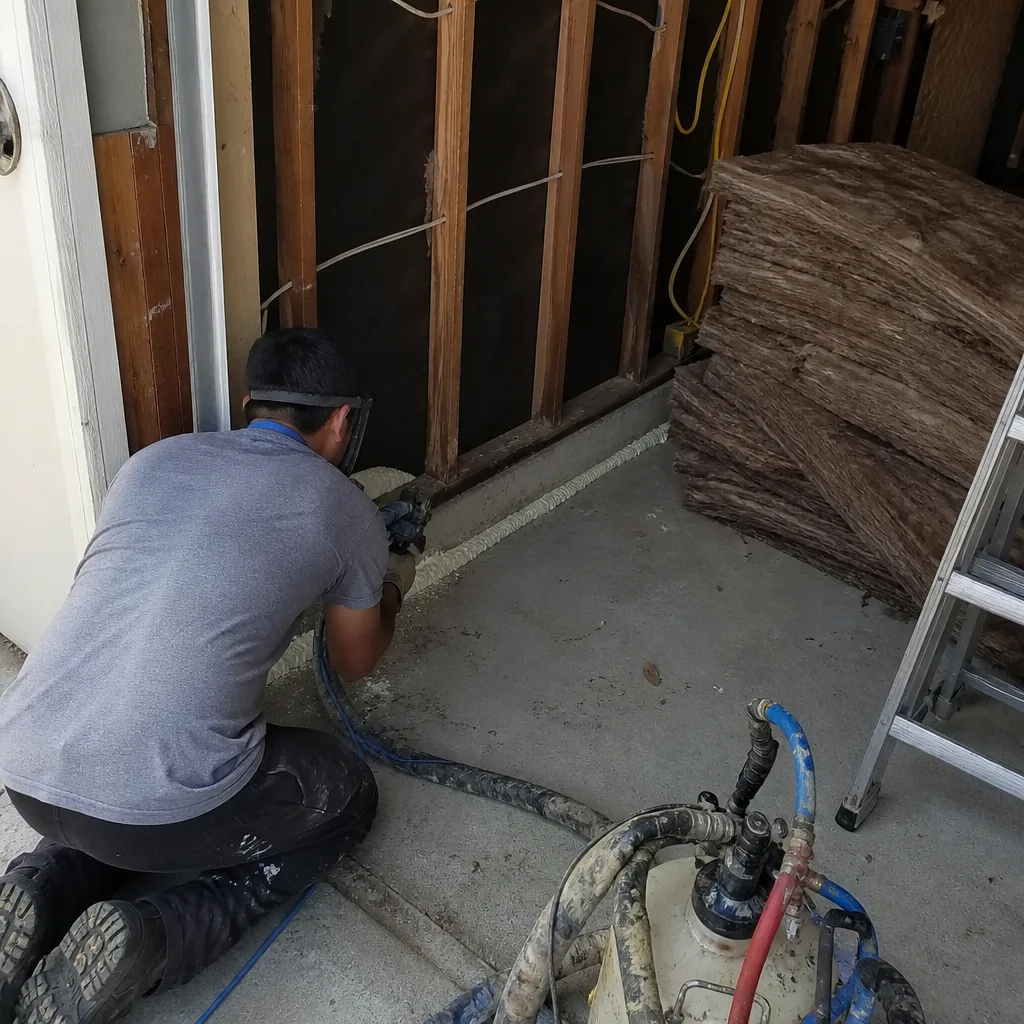
Step four is permit issuance and construction. Pasadena requires inspections at foundation, framing, insulation, and final. The contractor must schedule these, attend them, and address any corrections before proceeding. Final inspection includes verification against the approved permit set, which is why permit ownership matters.
Pasadena’s historic districts, including portions of Bungalow Heaven and Landmark Districts, add a design review layer. This is not a permit issue but a separate approval that must precede permit submission. Contractors unfamiliar with Pasadena’s historic preservation process sometimes submit permits only to discover the design review requirement mid-stream.
What Pasadena ADUs Actually Cost: Realistic Ranges
ADU costs in Pasadena reflect local construction wages, permit fees, and site conditions common to the city’s older housing stock. These ranges are all-in, from initial drawings through final inspection and certificate of occupancy.
| ADU Type | Size Range | Typical All-In Cost in Pasadena | Key Cost Drivers |
|---|---|---|---|
| Garage Conversion ADU | 400-600 sq ft | $125,000-$195,000 | Existing slab condition, electrical service upgrade, fire separation |
| Junior ADU (JADU) | 150-500 sq ft | $85,000-$140,000 | Interior conversion complexity, separate entrance requirement, utility sharing |
| New Detached ADU | 500-1,200 sq ft | $220,000-$450,000 | Foundation type, utility trenching distance, roofing material |
| Prefab/Modular ADU | 400-800 sq ft | $180,000-$320,000 | Transport access, crane placement, site prep and utility connections |
These ranges assume standard finishes and no extraordinary site conditions. A sloped lot in the San Rafael Hills, for example, requires stepped foundations or retaining walls that add $15,000-$40,000. Properties with unpermitted additions may require legalization before ADU permits can issue.
Under Haven Standard Clause 1, every Ellery ADU Studio Pasadena project is quoted with a written price before any work begins. We do not provide “estimates” that shift upward during construction. The price you sign is the price you pay, except for changes you request in writing.
Permit and fee costs in Pasadena are additional to construction but calculable. Building permit fees run approximately 1.5-2% of construction value. School fees, park fees, and utility connection fees add $5,000-$12,000 depending on ADU size and utility requirements. A contractor who cannot itemize these is not prepared for Pasadena’s process.
Common Mistakes to Avoid
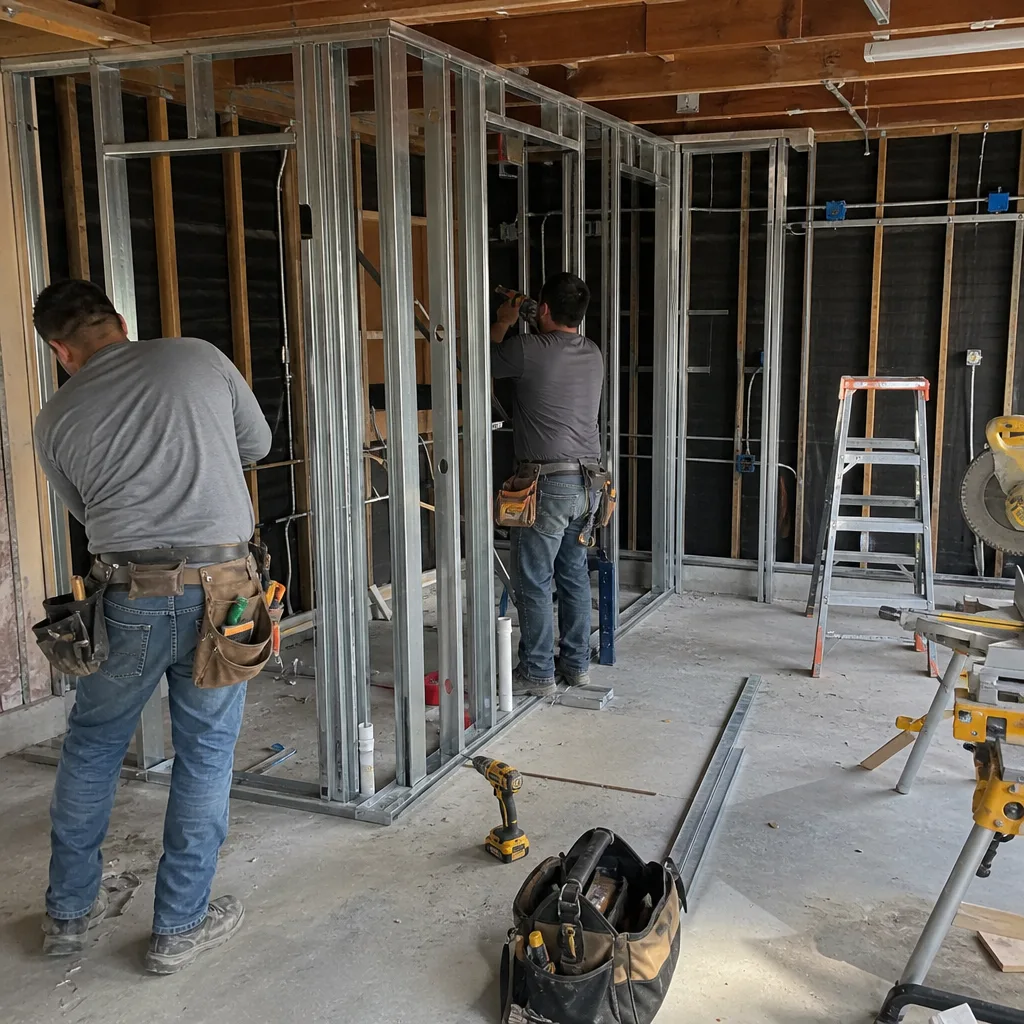
- Hiring an architect separately, then bidding the drawings. This design-bid-build structure leaves you managing the gap between drawings and construction. The savings on design fees are typically lost to change orders and delays.
- Accepting a bid without verifying Pasadena-specific experience. A contractor with 50 kitchen remodels in Glendale may have zero ADU permits in Pasadena. The processes differ significantly.
- Ignoring the existing slab in garage conversions. In Pasadena’s 1920s-1950s housing stock, garage slabs are often 2.5-3 inches thick, below the 3.5-inch minimum for habitable space. Testing after contract signing means a change order.
- Assuming state ADU law overrides all local requirements. California’s ADU laws set minimums; cities can add design review, parking replacement, and historic district requirements. Pasadena does.
- Not requesting the permit set before construction starts. You should receive and review the complete approved permit set. It’s the document that governs your project and the basis for your final inspection.
- Verbal promises about timeline or price. Every commitment should be in the contract. Verbal assurances about “getting it done fast” or “staying close to the estimate” have no enforcement mechanism.
- Neglecting utility capacity early. Pasadena Water and Power may require electrical service upgrades for ADUs with electric HVAC and appliances. This is a $3,000-$8,000 line item that should be identified in design, not discovered during rough electrical.
When to Call a Professional
Call a design-build ADU specialist when your project involves any of the following: a garage conversion on a pre-1960 foundation, a new detached unit on a sloped lot, coordination with prefab or modular systems, or location in a Pasadena historic district or Landmark District. These conditions multiply the interfaces between design, permitting, and construction that a single-contract structure is designed to manage.
Ellery ADU Studio Pasadena offers free estimates in Pasadena - call (626) 427-9813. We also provide a Free Second Opinion on any written estimate already in hand. If you’ve received a bid and want to verify whether the scope, pricing structure, and contract terms protect you adequately, we’ll review it against the five clauses outlined in this guide.
Frequently Asked Questions
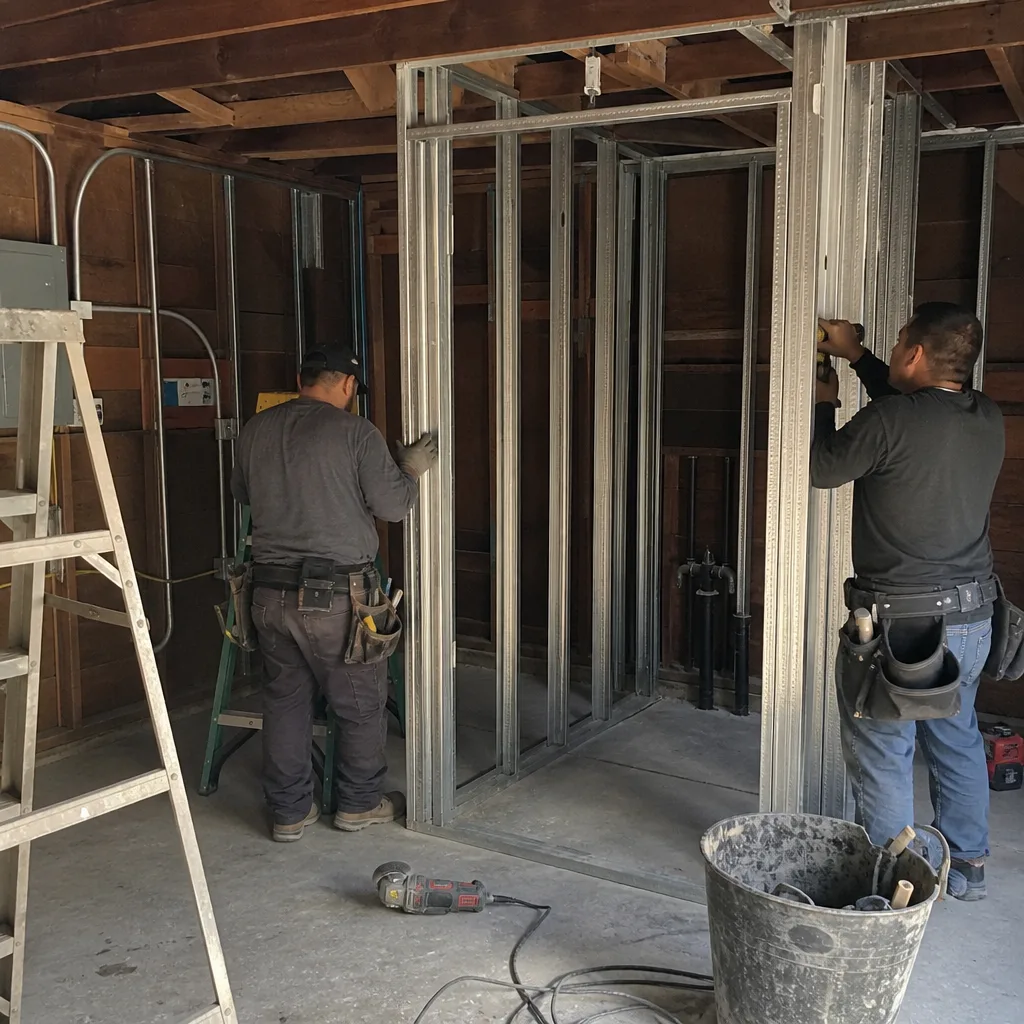
Garage conversion ADUs in Pasadena typically run $125,000-$195,000 all-in, new detached ADUs $220,000-$450,000, and junior ADUs $85,000-$140,000, including drawings through final inspection. Costs vary with existing conditions, utility requirements, and finish level. Call (626) 427-9813 for a written fixed-price quote - estimates are free.
The primary contractor must hold a B-General Building license, with C-10 Electrical and C-36 Plumbing either held directly or covered by verified subcontractors. All must be active with current bonds and workers’ compensation. Verify at cslb.ca.gov in under 90 seconds.
Plan check typically takes 8-14 weeks including one correction cycle, depending on submission completeness and current city volume. Historic district properties add 4-8 weeks for design review. Construction timelines run 4-8 months for conversions, 8-14 months for new detached units.
Under a properly structured contract with a defined change-order threshold, the price should not change unless you request modifications in writing. At Ellery ADU Studio Pasadena, Haven Standard Clause 5 (No Surprises) locks the scope at signing - no door-side upsells, no scope creep. Call (626) 427-9813 for the full contract terms.
The contractor should pull all permits as part of their scope. Permit ownership should be specified in the contract, with the contractor responsible for plan check corrections included in the fixed price. Homeowners who pull their own permits assume liability they are not equipped to manage.
A garage conversion ADU repurposes an existing structure, typically costing less but requiring slab evaluation, fire separation, and often electrical service upgrades. A new detached ADU is built from foundation up, with more design flexibility but higher cost and longer timeline. Pasadena allows both; feasibility depends on lot coverage, setbacks, and existing structures.
The Bottom Line
Hiring an ADU contractor in Pasadena is not about finding the lowest bid or the longest resume. It’s about contract structure: one entity accountable for both the permit set and the finished building, with a written fixed price, documented process, and guaranteed certificate of occupancy. Verify licenses directly. Demand plan check evidence. Read the contract for the five clauses that separate ADU specialists from general remodelers. And never accept a proposal based on assumptions that you’ll pay to correct later.
Written by Nadia Ellery, Owner at Ellery ADU Studio Pasadena, serving Pasadena since 2015.