
Last updated September 25, 2026
The Complete Guide to ADU in Pasadena
Most homeowners who call us believe they’ve made one decision: “I want an ADU.” In reality, they’ve stepped into a sequence of seven irreversible commitments, and Pasadena’s local zoning overlay adds two approval steps that state ADU law does not require. These steps swallow four to six weeks and surprise every homeowner who read only the California government summary. We’ve guided over 900 ADU projects since 2015, and the ones that finish on time and on budget share one trait: the owner understood every gate before walking through it. This guide maps each gate in order so you can price and plan before you sign anything. For more guides & resources on ADU planning, explore our blog.
Quick Answer
An Accessory Dwelling Unit (ADU) in Pasadena is a secondary residential unit on a single-family lot, permitted under state law but subject to additional local design standards, Historic Preservation Overlay Zone review, and hillside zoning restrictions that add 4-6 weeks to approval. A complete ADU project in Pasadena typically ranges from $85,000 for a Junior ADU interior conversion to $380,000+ for a new detached unit, with garage conversions falling between $125,000 and $210,000 all-in, drawings through final inspection.
Table of Contents
- Pasadena’s Local ADU Rules: What Overrides State Law
- The Seven Irreversible Commitments
- ADU Types and Realistic Pricing in Pasadena
- Week-by-Week Timeline: From Lot Assessment to Certificate of Occupancy
- Why a Single Design-Build Contract Eliminates Permit-Gap Liability
- The Three Documents You Need Before Breaking Ground
- Prefab and Modular Options: What Works in Pasadena
- Common Mistakes to Avoid
- When to Call a Professional
- Frequently Asked Questions
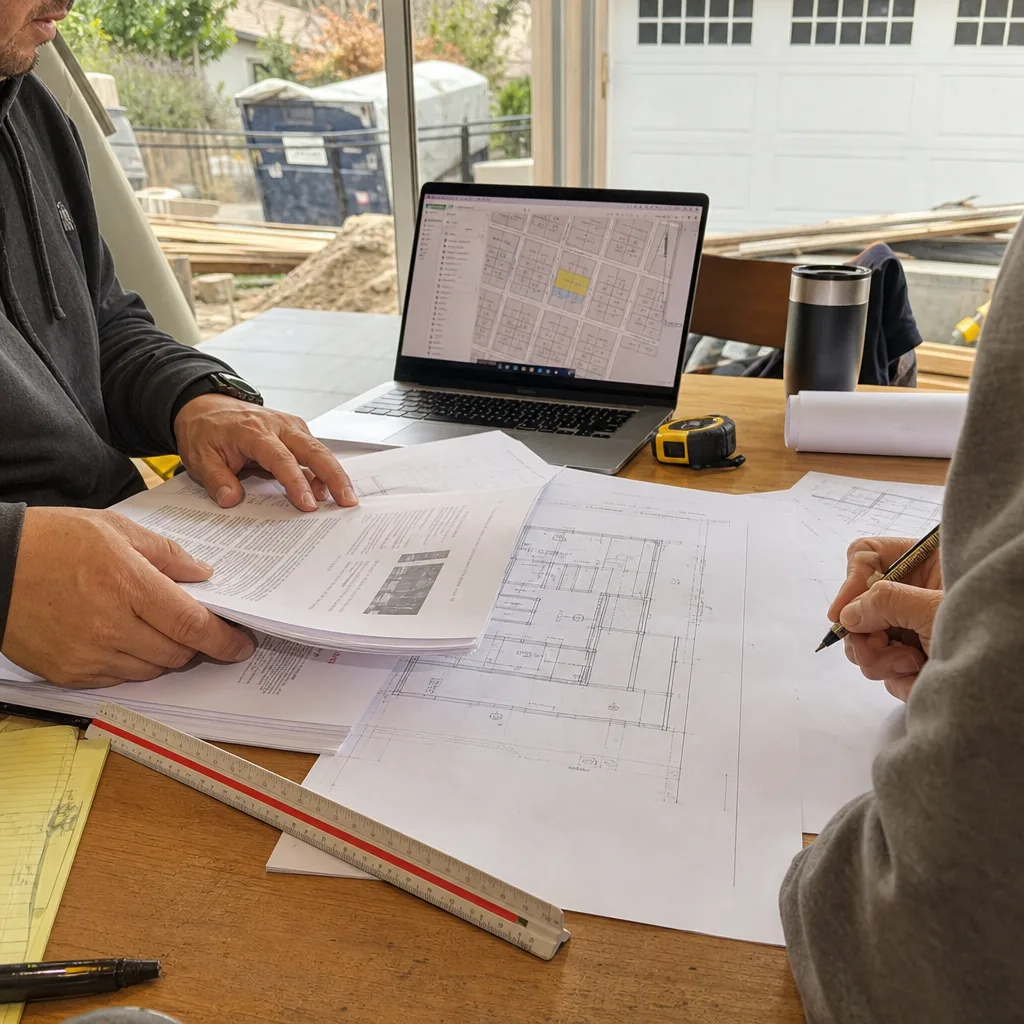
Pasadena’s Local ADU Rules: What Overrides State Law
California’s statewide ADU laws (AB 2294, SB 897, and their predecessors) set minimum permissiveness: cities cannot outright ban ADUs, cannot require replacement parking when a garage converts, and must approve or deny within 60 days. But cities can layer additional requirements, and Pasadena does.
Historic Preservation Overlay Zones (HPOZs). Pasadena contains 37 HPOZs covering roughly one-third of residential parcels. If your property sits in an HPOZ, your ADU design must pass HPOZ Board review before the Planning Department will accept your permit application. This review examines materials, roof form, window proportions, and massing relative to the primary residence. The HPOZ Board meets monthly, and a disapproved design cycles back one month. We’ve seen HPOZ review add 4-8 weeks to projects where the owner assumed state law guaranteed a faster path. The Bungalow Heaven HPOZ, for example, routinely requests steeper roof pitches and divided-light windows that add $8,000-$15,000 to a garage conversion’s finish budget.
R1 Hillside restrictions. Pasadena’s hillside zones, concentrated north of the 210 Freeway in neighborhoods like Linda Vista and Annandale, trigger additional geotechnical and grading scrutiny. The city requires a soils report for any new foundation in these areas, and the Fire Department may mandate enhanced access for emergency vehicles. A standard 20-foot driveway width becomes 24 feet. These aren’t negotiable; they’re life-safety codes that shape your site plan before an architect draws a wall.
Pasadena design standards beyond Title 24. The city’s Residential Design Guidelines specify maximum building heights, side-yard setbacks, and visual compatibility standards that exceed state minimums. Where state law allows 16 feet for a detached ADU, Pasadena’s design guidelines often push for lower profiles in view-sensitive areas. Where state law permits 4-foot side setbacks, Pasadena may require 5 feet on corner lots for fire access. These aren’t hidden traps; they’re published rules that separate a permitted project from a rejected one.
Utility connection fees. Pasadena Water and Power charges connection fees based on meter size and service type, not flat statewide rates. A detached ADU with full kitchen and laundry typically requires a 1-inch water meter upgrade and separate electric service, with combined connection fees running $4,500-$8,200 in 2024-2025. These numbers don’t appear in Sacramento’s ADU handbooks.
The Seven Irreversible Commitments
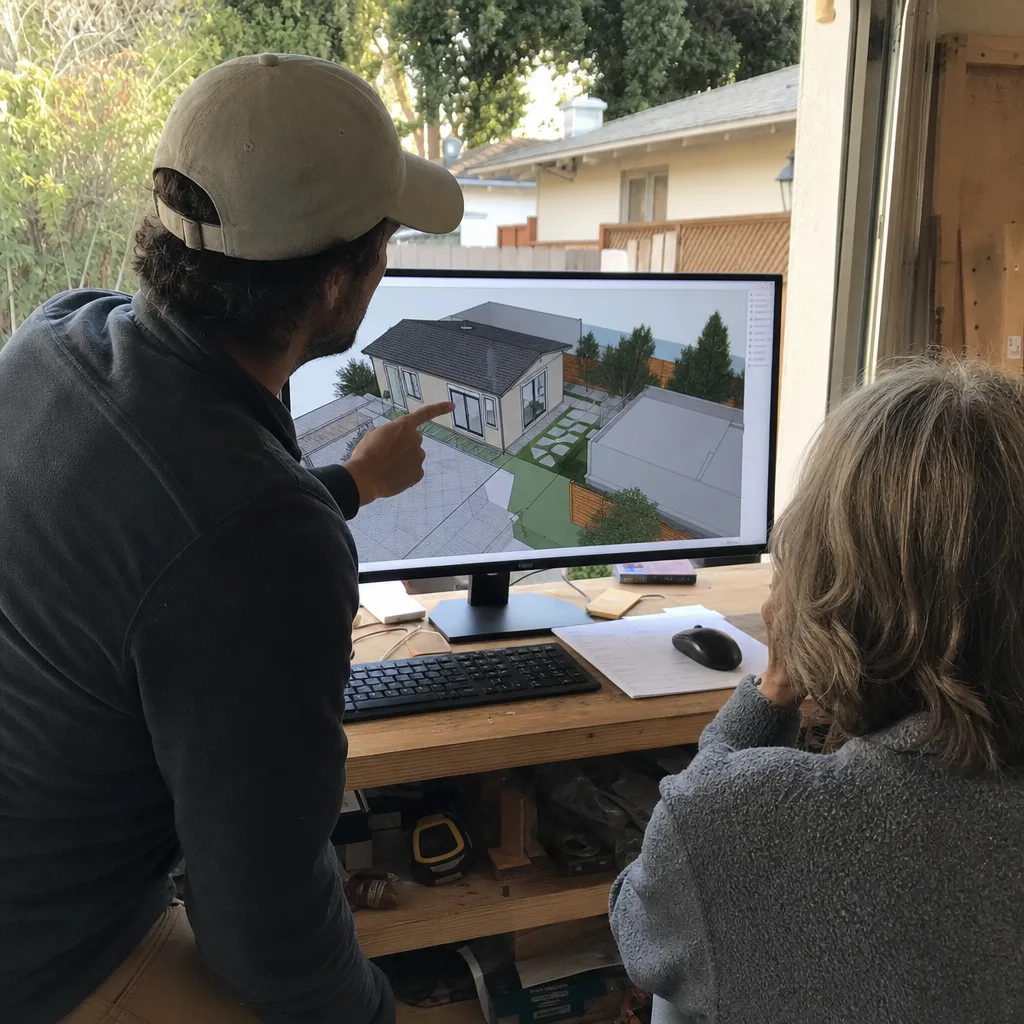
Every ADU project moves through seven gates. Once you pass a gate, you cannot return without cost and delay. Understanding them in order prevents the most expensive mistake in residential construction: discovering a constraint after you’ve already committed resources.
- Lot feasibility commitment. You decide your lot is buildable based on setback, coverage, and utility access. This happens before you hire anyone. In Pasadena, check the Zoning Information Map first, then confirm HPOZ status. We’ve had homeowners in the Madison Heights area discover their lot coverage was already maxed out by a 2019 pool addition, making a detached ADU impossible without a variance.
- ADU type commitment. You choose among attached ADU, detached ADU, garage conversion, or Junior ADU (JADU). Each type locks in your parking requirements, fire separation standards, and utility strategy. A JADU, for example, must be contained within the existing walls of the primary residence and shares kitchen or bathroom facilities; once you file for a JADU, you cannot expand it to a full ADU without a new permit cycle.
- Design contract commitment. You engage a designer or design-build studio to produce permit drawings. This is where most homeowners discover they’ve already made commitments one and two incorrectly. A designer who doesn’t build may specify details that prove unconstructable at your quoted price. At Ellery ADU Studio Pasadena, we produce the permit set as the core product, not an afterthought, because the permit set is what the city approves and what the builder must follow.
- Permit submittal commitment. Your drawings go to Pasadena Planning and Building. The city assigns a plan check number, and the clock starts. In Pasadena, plan check for ADUs currently runs 6-10 weeks for straightforward projects, 12-16 weeks for HPOZ or hillside properties. Corrections add 2-4 weeks per cycle. You cannot change the design substantially without restarting the clock.
- Construction contract commitment. You sign a fixed-price agreement to build what’s been permitted. This is irreversible in practice because you’ve already invested design fees, permit fees, and months of time. If your construction contract doesn’t match your permit set exactly, you’ve created permit-gap liability: the builder builds one thing, the permit shows another, and the inspector fails the final.
- Construction commencement commitment. Ground breaks. In Pasadena’s clay-heavy soils, especially in the San Rafael hills, foundation work may reveal conditions that weren’t visible during lot assessment. A geotechnical surprise at this stage costs $5,000-$20,000 and adds 2-6 weeks. There’s no going back to reconsider ADU type or design.
- Final inspection and occupancy commitment. The city inspects against the approved permit set, not against what you thought you were getting. If the built ADU doesn’t match, you correct it or you don’t get your Certificate of Occupancy. This is where the 365-Day Done Right Promise matters: if the finished ADU is not built to the permitted drawings, we make it right, in writing, before the project starts.
ADU Types and Realistic Pricing in Pasadena
Statewide averages mislead Pasadena homeowners because they don’t account for HPOZ materials, hillside soils, and Pasadena Water and Power connection fees. The ranges below reflect our 2024-2025 project data for Pasadena specifically, all-in from design contract through final inspection, with a written price before any work starts under Haven Standard Clause 1.
| ADU Type | Typical Size | Pasadena Price Range (2024-2025) | Best For |
|---|---|---|---|
| Junior ADU (JADU) | 150-500 sq ft | $85,000-$140,000 | Homeowners with underused interior space; rental income with minimal construction |
| Garage Conversion ADU | 300-600 sq ft | $125,000-$210,000 | Existing garage in fair condition; fastest path to rental income |
| Attached ADU (addition) | 400-800 sq ft | $180,000-$290,000 | Expanding primary residence footprint; shared utility infrastructure |
| New Detached ADU | 400-1,200 sq ft | $260,000-$380,000+ | Maximum rental income; separate household privacy |
These ranges assume standard finishes, no HPOZ premium materials, and flat to gently sloping lots. Hillside foundations add $15,000-$45,000. HPOZ-mandated materials add $8,000-$25,000 depending on scope. Utility trenching across established Pasadena yards with mature oak roots (common in the Bungalow Heaven and Prospect Park areas) can add $3,000-$8,000.
Under Haven Standard Clause 1, every project we quote receives a written price before any work begins. The words “call for a quote” do not appear on our site because they contradict the standard we ask clients to hold us to.
Week-by-Week Timeline: From Lot Assessment to Certificate of Occupancy
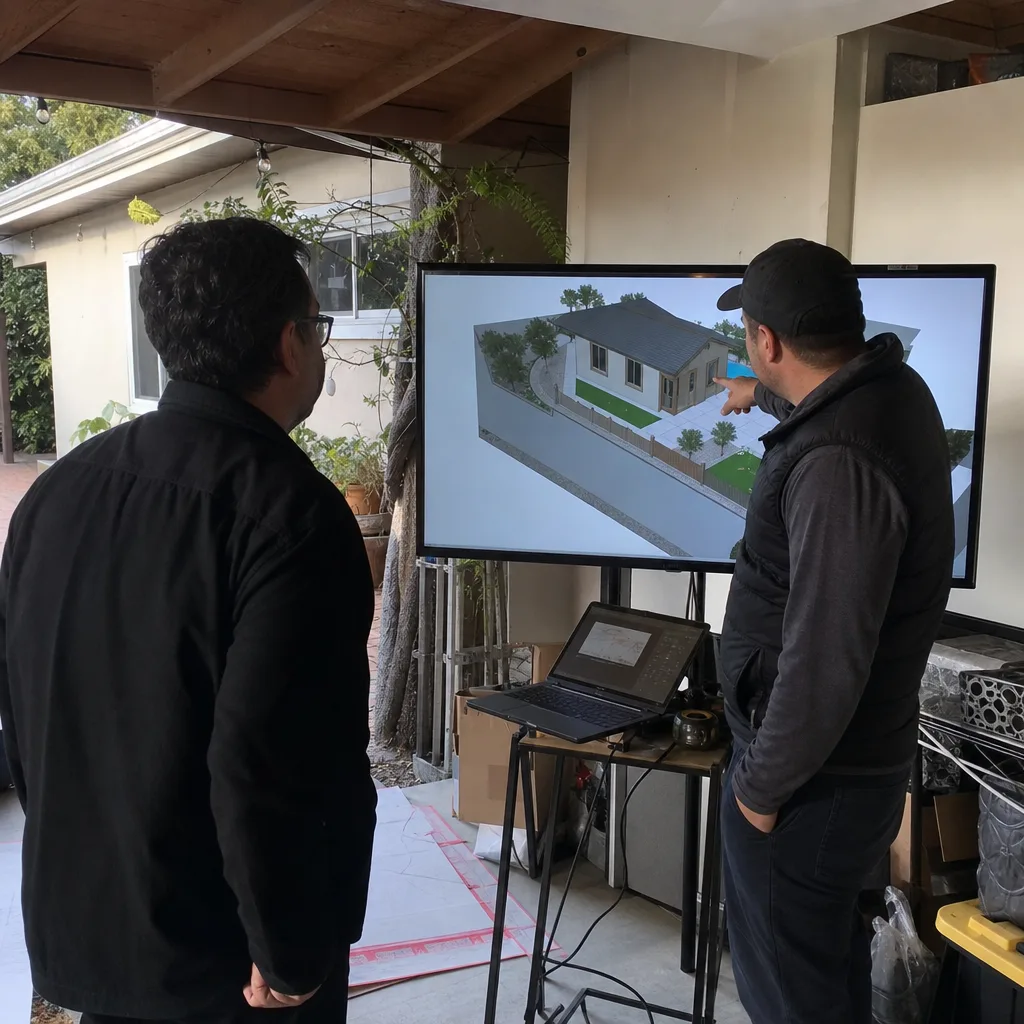
Pasadena’s ADU timeline differs from Los Angeles County’s unincorporated areas and from neighboring South Pasadena or Altadena. Here’s what we see in practice, not in theory.
Phase 1: Lot Assessment and Feasibility (Weeks 1-2)
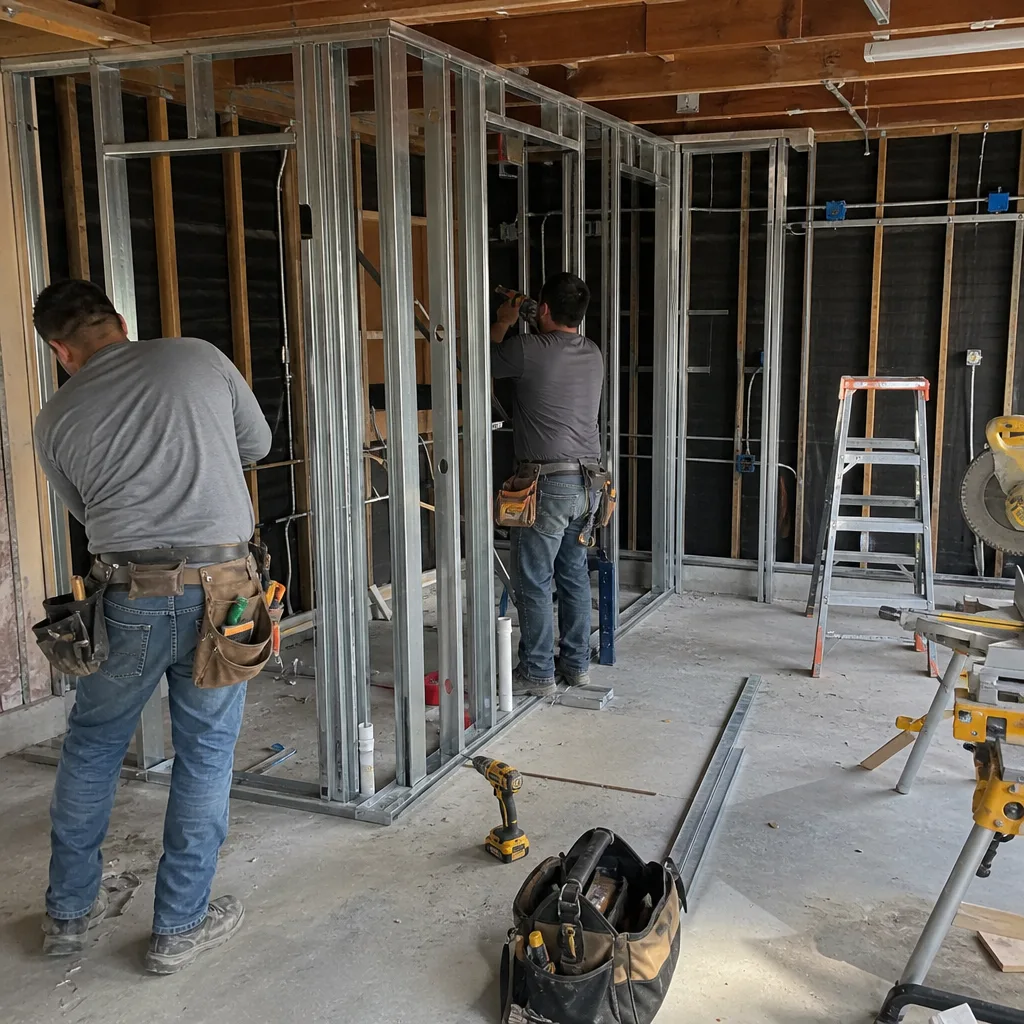
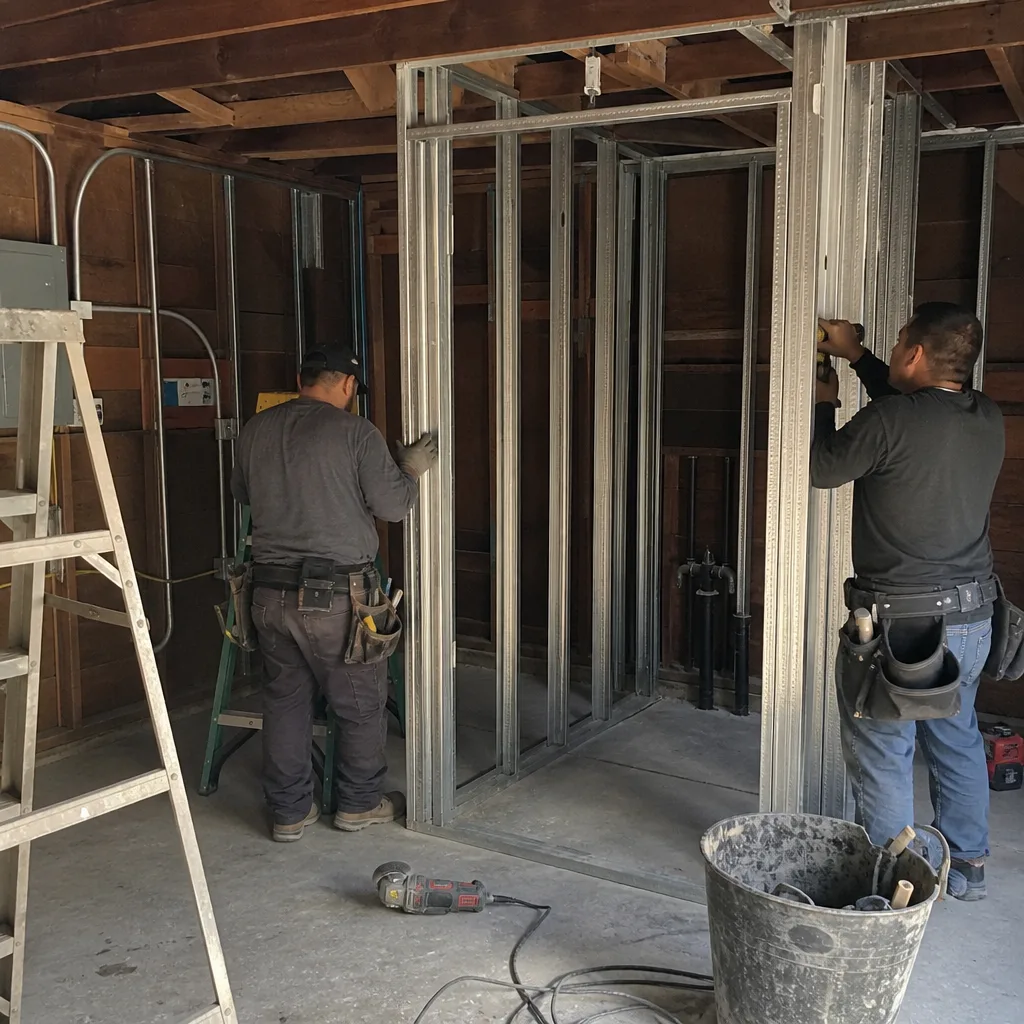
We verify zoning, HPOZ status, hillside designation, utility locations, and existing structure conditions. In Pasadena, this includes a preliminary check with Pasadena Water and Power for service capacity. For garage conversions, we assess slab thickness, framing condition, and roof structure. We’ve found 4-inch slabs that are within range for conversion and 3-inch slabs that aren’t; we say what we found, not what we felt, and document with photos.
Phase 2: Design and Permit Documentation (Weeks 3-8)
The permit set includes architectural plans, structural calculations, Title 24 energy compliance, and mechanical/electrical/plumbing schematics. In HPOZ areas, we prepare HPOZ Board presentation materials concurrently. For hillside lots, we coordinate the geotechnical report. A complete permit set is the core product; it’s what the city reviews and what the builder constructs from.
Phase 3: Plan Check and Approval (Weeks 9-18)
Pasadena Planning and Building reviews for zoning compliance, structural safety, and energy code. HPOZ properties add 4-8 weeks for Board review. Corrections are normal; we address them in 3-5 business days. Rush plan check is not available for ADUs in Pasadena.
Phase 4: Construction (Weeks 19-42)
Garage conversions: 10-14 weeks. Attached ADUs: 16-22 weeks. New detached ADUs: 20-28 weeks. Hillside foundations and HPOZ material lead times extend the range. Pasadena’s winter rain pattern (January-March) can delay exterior work; we schedule accordingly. See our seasonal ADU care guide for year-round maintenance after move-in.
Phase 5: Final Inspection and Certificate of Occupancy (Weeks 43-46)
The city inspects against the approved permit set. Corrections, if any, are completed and re-inspected. The Certificate of Occupancy is issued when the built unit matches the permitted drawings. This is why the permit set matters: it’s the standard the inspector applies.
Why a Single Design-Build Contract Eliminates Permit-Gap Liability
The most common failure mode in ADU construction isn’t bad construction. It’s permit-gap liability: the gap between what the architect drew, what the city approved, and what the contractor built.
In a traditional model, you hire an architect for design, then bid the plans to contractors-a tension explored in our DIY vs Professional ADU guide for Pasadena homeowners. The architect’s incentive is design quality; the contractor’s incentive is lowest bid. When the two conflict, you mediate. When the conflict isn’t discovered until final inspection, you pay twice: once to build it wrong, once to rebuild it to the permit.
We’ve seen this in Pasadena specifically. A homeowner in the Chapman Woods area hired a designer for a garage conversion, then a separate contractor for construction. The designer specified a 9-foot ceiling to maximize perceived space. The contractor framed at 8 feet to avoid raising the roof and the associated structural engineering. The inspector failed the final because the built ceiling height didn’t match the approved plans. The homeowner paid $12,000 to reframe and re-inspect.
A single design-build contract eliminates this gap. At ADU Design & Permitting in Pasadena, the same entity that produces the permit set executes the construction. The Haven Standard, Clause 5 (No Surprises), locks the scope at signing; no door-side upsells, no scope creep. If the finished ADU is not built to the permitted drawings, the 365-Day Done Right Promise applies, and we make it right.
This isn’t theoretical. Since 2015, we’ve designed, permitted, and built over 900 ADUs, every one with a written price before work started and a documented photo record when work was complete. The photo record isn’t a summary of how it felt; it’s evidence of what was found and what was done, delivered to the client after every site visit.
The Three Documents You Need Before Breaking Ground
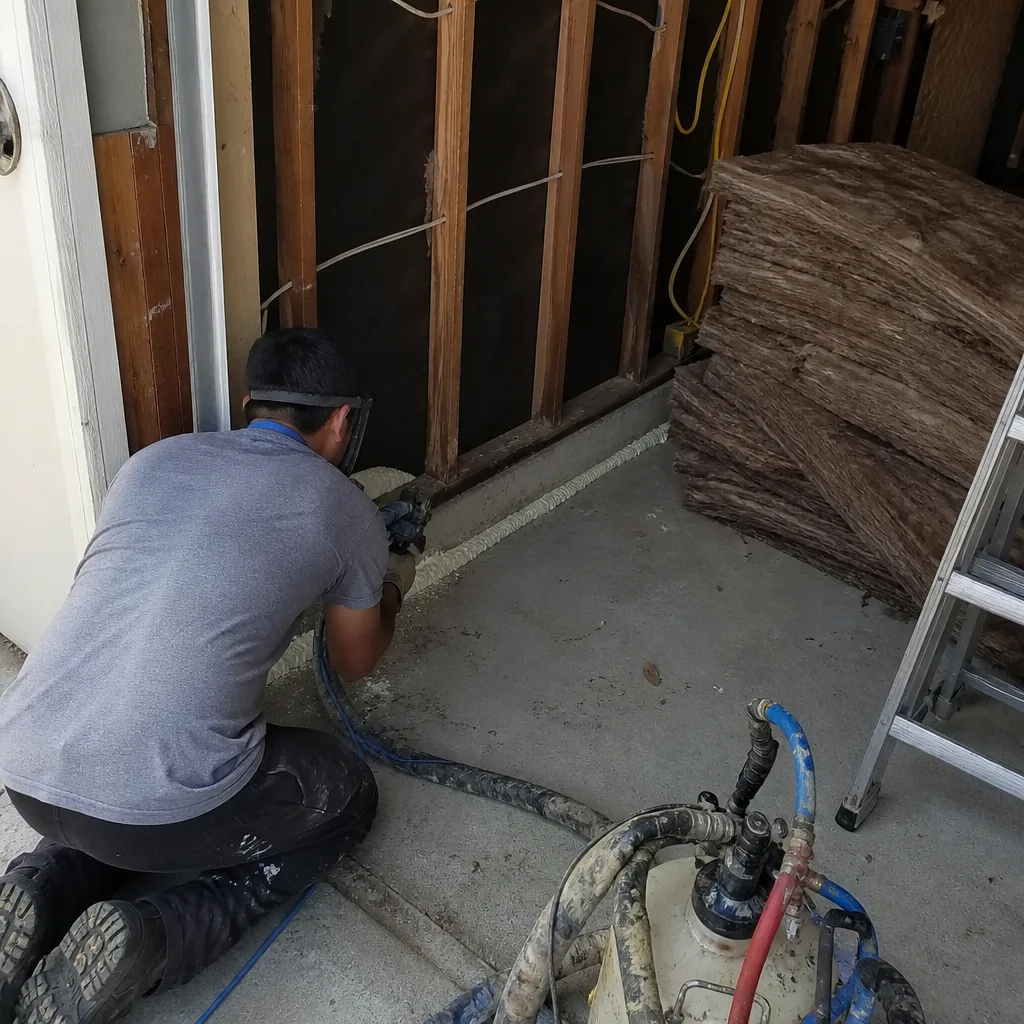
Every ADU project in Pasadena should have these three documents in hand before the first shovel touches soil. Missing any one creates exposure that compounds through construction.
- The approved permit set. This is the city’s official approval of your architectural, structural, and MEP plans. It includes the plan check corrections sheet showing what was modified during review. The builder constructs from this set, and the inspector verifies against it. Not “permit applied for.” Approved.
- The construction contract with a fixed price and fixed scope. Under Haven Standard Clause 1, this price is written before any work begins. The scope references the permit set by date and plan check number. Change orders are documented in writing with cost and schedule impact. Clause 5 (No Surprises) prohibits door-side upsells: if it wasn’t in the contract, it’s not your cost.
- The Certificate of Occupancy timeline and conditions. This isn’t a document you hold on day one; it’s a written understanding of what final inspection requires and when it’s scheduled. The timeline connects construction milestones to inspection dates, with buffer for Pasadena’s inspection scheduling (currently 5-7 business days out for most trades). Knowing this timeline prevents the common error of scheduling movers or tenants before the CO is achievable.
We provide all three as standard practice. The permit set is our core product. The fixed-price contract is Haven Clause 1. The CO timeline is part of every project schedule we publish.
Prefab and Modular Options: What Works in Pasadena
Prefab and modular ADUs reduce on-site construction time and weather exposure, but they don’t eliminate Pasadena’s local requirements. HPOZ review, hillside geotechnical reports, and utility connections still apply. The question isn’t whether prefab works in Pasadena; it’s which systems integrate with Pasadena’s specific constraints.
We’ve specified and coordinated prefab and modular systems from Abodu, Cover, Dvele, Mighty Buildings, Boxabl, Plant Prefab, Tuff Shed, and James Hardie within our single-contract model. Each has distinct characteristics relevant to Pasadena:
- Abodu units arrive 90% complete and typically require 2-3 weeks of on-site finish work. In Pasadena’s HPOZs, the exterior finishes must be reviewed for compatibility; Abodu’s standard cladding may need modification, which we coordinate in the design phase.
- Cover uses a panelized system with more site flexibility. This suits hillside lots where crane access is limited and modules must be smaller. We’ve used Cover systems in Linda Vista where a single-module delivery wasn’t feasible.
- Dvele emphasizes high-performance envelopes and integrated MEP. In Pasadena’s climate, where summer temperatures regularly exceed 95°F and winter nights drop below 40°F, the thermal performance affects both comfort and Title 24 compliance.
- Mighty Buildings uses 3D-printed composite panels. The material is novel and requires early engagement with Pasadena Building and Safety for alternative materials approval. We initiate this conversation during design, not after submittal.
The key point: prefab doesn’t bypass Pasadena’s process. It compresses the construction phase but doesn’t eliminate plan check, HPOZ review, or final inspection. A single design-build contract coordinates the prefab manufacturer, the site work, and the local approvals so neither the designer nor the builder can point at the other when something is off.
Common Mistakes to Avoid
- Assuming state law preempts all local rules. California’s ADU laws set floors, not ceilings. Pasadena’s HPOZ process, hillside restrictions, and design standards add requirements that state law doesn’t mention. Reading only the state summary leaves you unprepared for 4-6 weeks of additional review.
- Starting design before confirming utility capacity. Pasadena Water and Power maintains service records by address, but they’re not instant. We’ve seen projects stall when the existing 3/4-inch meter couldn’t support a second dwelling unit and the homeowner hadn’t budgeted for a meter upgrade. Check capacity before you commit to ADU type.
- Treating the permit set as a formality. The permit set is the enforceable standard. A vague or incomplete set creates ambiguity that the builder resolves at your cost. We treat the permit set as the core product because it governs every subsequent decision.
- Signing a construction contract without a fixed price. Time-and-materials contracts shift all risk to the homeowner. Under Haven Standard Clause 1, every project receives a written price before any work begins. If a contractor won’t commit to a number, you haven’t finished the bidding process.
- Neglecting the photo record. Without documented evidence of existing conditions and work-in-progress, disputes about damage, scope, or quality become unresolvable. We provide a documented photo record on every visit; clients receive evidence, not summaries.
- Scheduling tenants before Certificate of Occupancy. Pasadena’s final inspection schedule is not guaranteed. Weather, corrections, and inspector availability all affect timing. We provide a CO timeline with every project, but we don’t control the city’s calendar.
- Choosing a designer and builder who don’t communicate. The permit-gap liability described above is real and expensive. A single design-build contract with one written price eliminates the designer-versus-builder blame gap.
When to Call a Professional
Call a professional when your lot assessment reveals any of the following: HPOZ designation, hillside zoning, uncertain utility capacity, an existing structure with unknown structural condition, or a timeline requirement that doesn’t accommodate learning on the job. Our step-by-step guide to hiring an ADU contractor in Pasadena walks you through vetting credentials, checking references, and comparing bids. These aren’t failures; they’re the normal complexity of building in a mature, regulated city.
Ellery ADU Studio Pasadena offers free estimates in Pasadena. We also provide a Free Second Opinion on any written estimate already in hand. A live person answers calls 24/7 at (626) 427-9813.
Frequently Asked Questions
ADU costs in Pasadena range from $85,000 for a Junior ADU interior conversion to $380,000+ for a new detached unit, with garage conversions typically falling between $125,000 and $210,000 all-in. These Pasadena-specific ranges include design, permitting, construction, and utility connections, not just construction labor. Call (626) 427-9813 for a written price before any work starts under Haven Standard Clause 1.
Pasadena ADU permitting takes 6-10 weeks for straightforward projects and 12-16 weeks for properties in Historic Preservation Overlay Zones or hillside areas. HPOZ Board review adds 4-8 weeks because the Board meets monthly and corrections cycle back to the next meeting. These timelines reflect actual 2024-2025 experience, not statutory minimums.
Yes, garage conversion to ADU is permitted in Pasadena under state law, and the city cannot require replacement parking. However, the existing structure must meet structural, seismic, and energy code requirements, and HPOZ properties need Board approval for exterior modifications. A typical Garage Conversion ADU in Pasadena runs $125,000-$210,000 all-in. Call (626) 427-9813 to assess your specific garage.
Under Haven Standard Clause 5 (No Surprises), the scope and price are locked at contract signing; no door-side upsells, no scope creep. The only price changes occur if you request a change order in writing, with documented cost and schedule impact. This is backed in writing before the project starts, not promised verbally.
Ellery ADU Studio pulls all permits as part of our single-contract design-build service. The permit set is our core product, and we manage submittal, plan check corrections, and inspection scheduling. You receive copies of all approvals and the final Certificate of Occupancy, but you don’t interface with Pasadena Planning and Building directly unless you choose to.
A Junior ADU (JADU) must be within the existing walls of the primary residence, limited to 500 square feet, and may share bathroom or kitchen facilities with the main house. A full ADU is a separate dwelling unit with independent kitchen, bathroom, and entrance. JADUs are faster and cheaper ($85,000-$140,000) but cannot be expanded to full ADUs without a new permit cycle. Full ADUs command higher rent and resale value but cost more and take longer.
Prefab ADUs can work in Pasadena HPOZs, but the exterior finishes must pass HPOZ Board review for material, color, and massing compatibility. We modify standard prefab specifications during design to meet these requirements, coordinating with manufacturers like Abodu or Cover for custom cladding. The prefab construction method doesn’t bypass HPOZ review; it requires earlier engagement with the process.
The Bottom Line
Building an ADU in Pasadena is a sequence of seven irreversible commitments, and Pasadena’s local rules add two approval steps that state law doesn’t mention. Success requires understanding every gate before you walk through it: lot feasibility, ADU type, design contract, permit submittal, construction contract, construction commencement, and final inspection. The three documents that protect you are the approved permit set, the fixed-price construction contract, and the Certificate of Occupancy timeline. A single design-build contract eliminates permit-gap liability and ensures the built ADU matches the permitted drawings. Since 2015, Ellery ADU Studio Pasadena has designed, permitted, and built over 900 ADUs, every one with a written price before work started and a documented photo record when work was complete.
Call (626) 427-9813 to schedule your free estimate. A live person answers 24/7. We also offer a Free Second Opinion on any written estimate already in hand.
Written by Nadia Ellery, Owner at Ellery ADU Studio Pasadena home, serving Pasadena since 2015.