
Plant Prefab Site Prep & Utilities: The Pasadena Owner’s Guide
Plant Prefab-compatible site prep and utilities work in Pasadena typically runs $8,500-$22,000 installed, depending on whether you’re connecting a single LivingHome module or coordinating multiple units with shared trenching. We stock the standard connection packages for Plant Prefab’s LivingHome 6, 8, and 10 series, and we can usually mobilize within 48 hours once the permit set is approved. Most Pasadena owners discover their site prep is incomplete or out of spec when Plant Prefab’s factory delivery window arrives and the local utility connections don’t match the module’s stub locations - a mismatch that costs $400-$800 per day in holding fees if the crane crew has to stand down.
Which Plant Prefab Models This Applies To
Plant Prefab’s LivingHome line breaks into three chassis widths, and the utility stub configuration changes with each. The LivingHome 6 uses a consolidated wet wall with water, sewer, and electrical entering through a single 8-inch chase on the long side. The LivingHome 8 splits these across two chases. The LivingHome 10, the most common order we see in Pasadena’s R-2 zoned lots near the Playhouse District, requires dual lateral trenches - one for electrical and gas, one for water and sewer - with a minimum 18-inch separation per Pasadena Water and Power code.
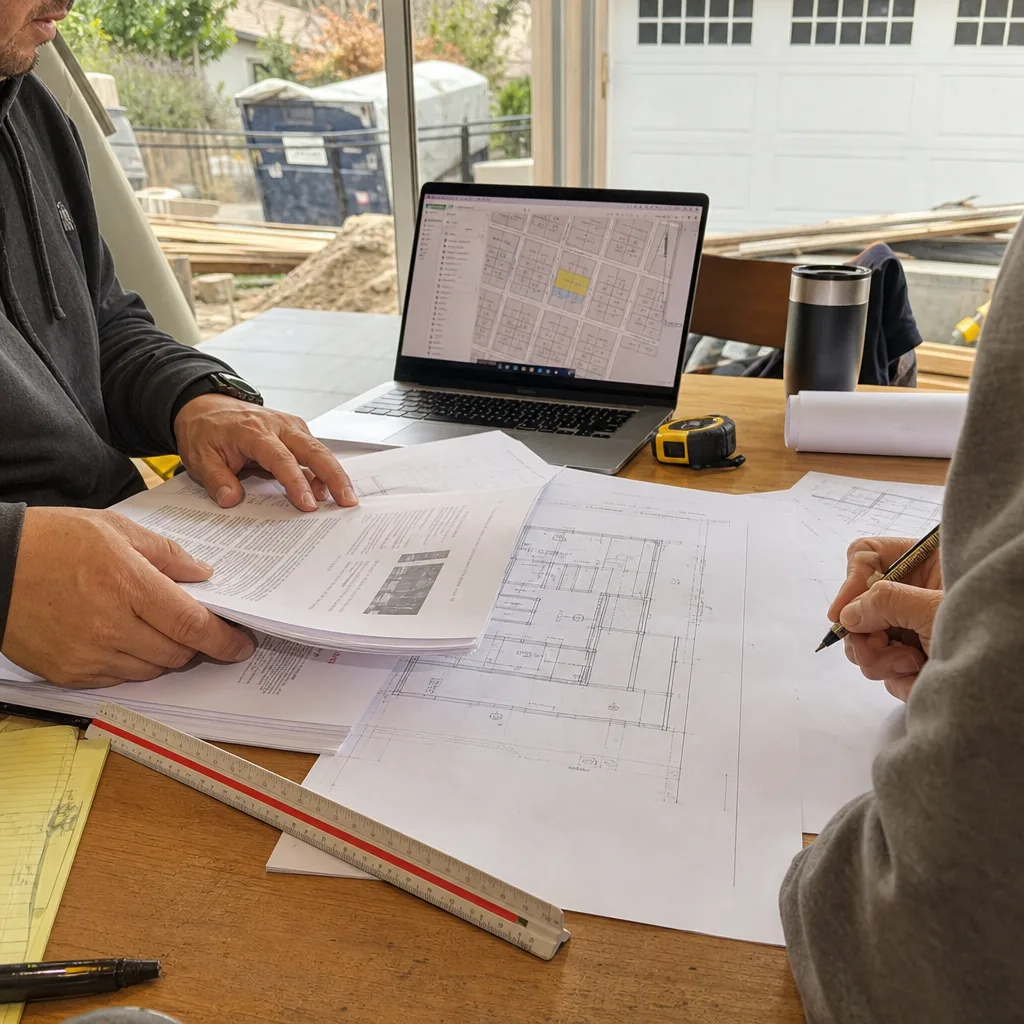
We identify the correct package by the module serial number, which Plant Prefab stamps on the transport frame and the mechanical drawings. The first four digits indicate the series; the suffix tells us whether the unit shipped with standard PVC stub-outs or the upgraded copper set that some Pasadena hillside lots require for seismic compliance. We’re an independent service provider - not affiliated with Plant Prefab - so we cross-check their factory drawings against Pasadena’s amended Title 24 requirements before we price anything. For most LivingHome 6 and 8 installs, we specify the OEM stub package Plant Prefab sources from Uponor. For the 10 series, we’ve found that swapping to local-rep Viega ProPress fittings saves a week on backorder time without voiding the module warranty, since both meet the same ASTM F877 spec. The compatibility gotcha: Plant Prefab’s 2021-2023 production run used a proprietary electrical junction box with a non-standard NEMA 3R footprint. If your module falls in that range, the aftermarket equivalent won’t bolt up without a fabricated adapter plate. We keep those plates in stock.
Signs Your Plant Prefab Site Prep & Utilities Is Failing
- Water pressure drops when two fixtures run simultaneously. This usually means the 1-inch main lateral was sized for the module’s base fixture count, but a Pasadena hillside install with a booster pump added later is drawing more than the static pressure can supply. The fix isn’t always a larger pipe - sometimes it’s relocating the pressure regulator that Plant Prefab mounts at the stub, which sits too close to the meter in some Pasadena lots.
- Sewer backs up during heavy rain. Pasadena’s older neighborhoods, especially south of Colorado Boulevard, still have combined storm-sewer lines in places. If your site prep contractor didn’t verify the lateral type with the city before trenching, the module’s 4-inch ABS outlet may be tied into a system that can’t handle peak flow. We’ve found tree root intrusion where the trench crossed within 10 feet of a mature camphor - common in Pasadena’s 1920s plantings.
- Electrical panel shows voltage sag under load. Plant Prefab specs a 200-amp main for the 10 series, but some Pasadena lots, particularly in the Linda Vista area, only have 100-amp service drops from the 1960s. The module will function until you run the induction cooktop and mini-split simultaneously, then the voltage dips below 110. This isn’t a module defect - it’s a service upgrade the site prep should have flagged.
- Gas line whistles on startup. The corrugated stainless steel tubing Plant Prefab uses for the interior run can transmit noise if the exterior regulator wasn’t set to the correct 11-inch water column pressure. Pasadena Gas Company sets this at the meter; if your site prep contractor skipped the manometer check, the module’s gas valve chatters.
- Foundation piers show settlement after the first winter. Pasadena’s clay-heavy soils, particularly in the San Rafael hills, expand and contract with seasonal moisture. Plant Prefab’s standard pier spec assumes 2,000 psf bearing pressure. In our experience, that works for the flat lots near Old Town but underestimates by 30 percent for any lot with a slope over 5 percent. We spec helical piers in those cases, and we document the soil report before we price.
Replacement Cost & What’s Included
For a typical Pasadena Plant Prefab site prep and utilities package, here’s what we quote, all-in, under Haven Standard Clause 1:
| Scope Item | Typical Range |
|---|---|
| Water lateral (trench, pipe, backflow, stub to module) | $2,800 - $4,200 |
| Sewer lateral (trench, 4-inch ABS, cleanout, connection) | $3,200 - $5,500 |
| Electrical service trench, conduit, 200-amp panel prep | $3,500 - $6,800 |
| Gas lateral (trench, CSST or black iron, regulator set) | $2,400 - $4,100 |
| Foundation piers or helical (per soil conditions) | $4,500 - $11,000 |
| Permit, inspection coordination, PWP utility markout | $1,800 - $2,600 |
The range driver is almost always the foundation. Flat lot with verified bearing soil, you’re at the low end. Hillside with clay expansion, or a lot where Pasadena’s oak tree protection ordinance prevents trenching within the drip line, you’re looking at directional boring and helical piers - that pushes you toward $22,000. Every quote we write includes a photo record of existing conditions, a line-item scope with no open allowances, and the 365-Day Done Right Promise in writing. If the permitted drawings don’t match what gets built, we fix it on our contract. No change orders, no door-side upsells - that’s Haven Standard Clause 5.
DIY or Call Us?
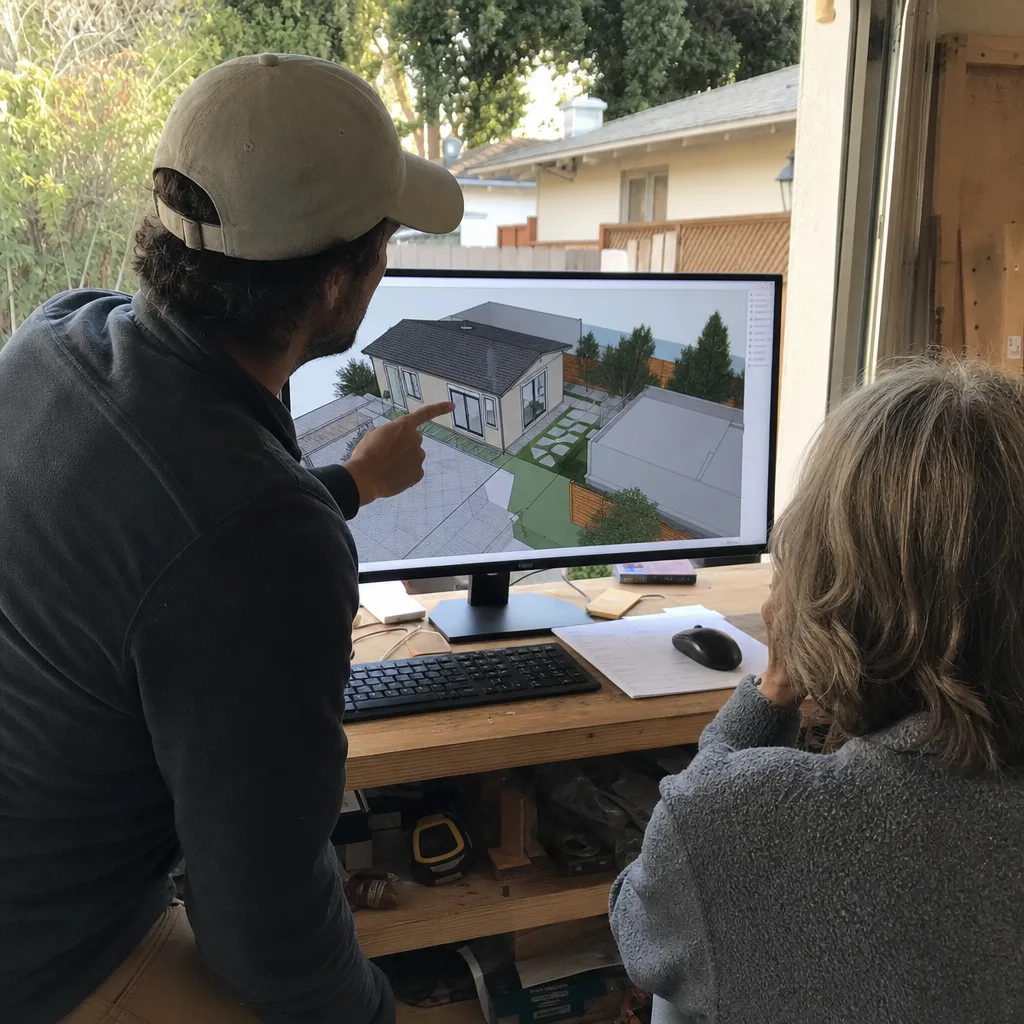
There’s a short list an owner can safely verify before calling. Check your Plant Prefab mechanical drawings against the actual stub locations after the module is set - sometimes transport shifts things by an inch or two, and catching that early saves a return visit. Verify that Pasadena Water and Power has your markout request on file; the ticket number should be posted 48 hours before any trenching. You can also confirm your gas meter size - if it’s a standard residential 250 cubic feet per hour meter and you’re running a tankless water heater plus furnace, you’ll likely need an upgrade.
Where DIY goes wrong is anything involving trench depth, slope, or live utility coordination. Pasadena requires 18-inch minimum cover for water, 24-inch for electrical conduit, and 12-inch for gas - but those are minimums; frost heave protection and seismic separation add another 6 to 12 inches in practice. More critically, if you nick a live electrical lateral or gas main, you’re not just liable for the repair - you’re shutting down the block and explaining yourself to PWP and the fire marshal. We pull the permits, coordinate the inspections, and carry the insurance that lets us work in those trenches. If your module delivery date is fixed and the crane is booked, you don’t have time to learn utility code on the fly. Call (626) 427-9813 and we’ll scope it in writing.
FAQs
Properly installed, the PVC and copper water lines should last 50-plus years, though Pasadena’s hard water - 280 ppm average in the foothills - can scale copper interiors and reduce flow by 15 percent over two decades. We spec Uponor PEX-A for most replacements now; it handles the mineral content better and carries a 25-year manufacturer warranty. The electrical conduit and gas CSST are essentially indefinite if installed to code. Call (626) 427-9813 for an exact quote on your module - estimates are free.
Partial repair is common. If one lateral is undersized or misaligned, we can cut and re-route without touching the others. The exception is foundation work - if piers are settling, adding new ones next to failing ones creates differential load paths that crack the module’s floor system. In those cases, we replace the full pier set and re-level. Every repair we quote includes a photo record of what we found and what we did. Call (626) 427-9813 for an exact quote - estimates are free.
Once permits are issued, trenching and rough-in for a single LivingHome 6 or 8 takes 3 to 5 working days. A LivingHome 10 with dual laterals and a foundation upgrade runs 8 to 12 days, assuming no utility markout delays. Pasadena Water and Power typically inspects within 48 hours of our call; we don’t backfill until the inspector signs off. Weather is rarely a factor here, but winter rains can delay hillside trenching if we need to install temporary shoring. Call (626) 427-9813 for a timeline tied to your specific lot - estimates are free.
We stock the standard stub packages, adapter plates for the 2021-2023 electrical junction boxes, and the Viega ProPress fittings we prefer for the 10 series. Foundation piers and helicals are job-ordered to the soil report - we don’t guess on structural components. For anything we don’t have on the truck, our Pasadena warehouse turns most items in 24 to 48 hours. Call (626) 427-9813 to confirm availability for your module serial number - estimates are free.
We also specify and coordinate site prep for Abodu, Cover, and Dvele modules under the same single-contract model, though the stub configurations and foundation specs differ by manufacturer. If you’re comparing prefab brands, we can price the site prep implications of each before you place your factory order.
Name the number, document the scope, then build it - in that order. That’s how we’ve handled 900-plus ADUs since 2015, every one with a written price before work started and a photo record when work was complete. Nadia Ellery runs the studio with the same approach she learned watching her uncle rebuild those Santa Monica bungalows: measure twice, specify once, and never let a client discover a line item that should have been named on page one.
Ready to get your Plant Prefab module connected? Call (626) 427-9813 to schedule your free estimate. We’ll review your factory drawings, walk your lot, and return a written scope with a fixed price - Haven Standard Clause 1, every time.
Written by Nadia Ellery, Owner, Ellery ADU Studio Pasadena at Ellery ADU Studio Pasadena, serving Pasadena and nearby areas.